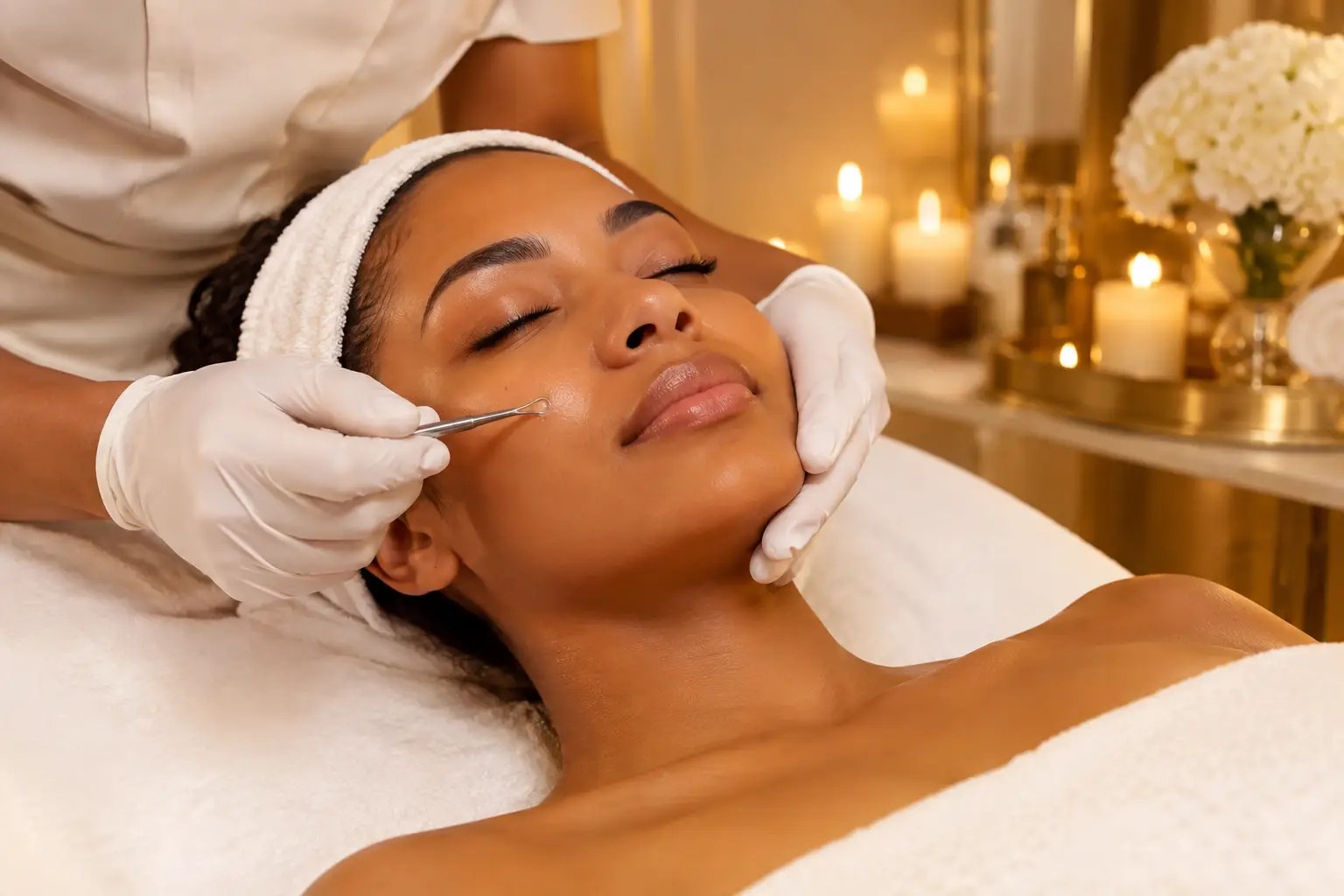
What Facial Is Best for Rosacea?

If your skin flushes from heat, stress, exercise, wine, or even the wrong cleanser, booking a facial can feel less like a treat and more like a risk. When clients ask what facial is best for rosacea, the answer is rarely the trendiest treatment on the menu. It is the facial that protects the skin barrier, reduces visible irritation, and respects how reactive rosacea-prone skin can be.
Rosacea is not simply “sensitive skin.” It is a chronic inflammatory condition that often shows up as persistent redness, visible capillaries, flushing, dryness, burning, or acne-like bumps. That means the best facial is usually a calming, barrier-supportive, highly customized treatment – not an aggressive exfoliating session designed to force fast results.
What facial is best for rosacea-prone skin?
In most cases, the best facial for rosacea-prone skin is a gentle, restorative facial focused on hydration, inflammation reduction, and skin barrier repair. Think soothing cleansing, minimal friction, cooling or comforting masks, and professional products chosen specifically for compromised skin.
This kind of facial should leave the skin feeling settled, soft, and balanced. It should not leave you bright red for days, stinging on the drive home, or wondering whether your skin is “purging.” For rosacea, calm is progress.
A well-designed rosacea-friendly facial often includes a mild cleanse, careful skin analysis, light enzyme use only if appropriate, nourishing serums, a barrier-repair moisturizer, and daily SPF guidance. Depending on the skin, the treatment may also include LED light therapy or other non-irritating options that help reduce inflammation. The exact protocol matters less than the philosophy behind it: support first, correction second.
Why aggressive facials often backfire
Many people with rosacea make the understandable mistake of trying to scrub, peel, or steam away the redness. Unfortunately, rosacea does not respond well to force. Skin that already struggles with inflammation and barrier dysfunction tends to react poorly to heat, over-exfoliation, harsh acids, and vigorous extraction.
That is why some facials that work beautifully for congestion, dullness, or resilient skin can be the wrong fit here. A deep-cleansing facial with intense steam may trigger flushing. A strong peel may leave the skin raw and reactive. Frequent microdermabrasion can worsen visible redness in some clients. Even facial massage, when done too briskly, can overstimulate sensitive capillaries.
There is a place for corrective skincare in professional settings, but with rosacea, timing and customization matter. A treatment that is technically excellent can still be a poor match if your skin barrier is already compromised.
The features of a rosacea-safe facial
When you are deciding what facial is best for rosacea, look less at the facial name and more at what the treatment includes. Rosacea-friendly facials tend to share a few important traits.
They are gentle from start to finish. The cleanser should not strip the skin. Exfoliation, if used at all, should be mild and purposeful. Products should avoid common irritants such as strong fragrance, unnecessary actives, or alcohol-heavy formulas.
They focus on hydration and barrier repair. Rosacea-prone skin often feels oily and dry at the same time, or irritated despite using rich products. A strong facial for this skin type helps restore balance with calming ingredients and a thoughtful finish that seals in moisture.
They are responsive, not rigid. An experienced aesthetician should adjust the treatment based on what your skin is doing that day. If you walked in flushed from the Charleston heat or your skin is reacting to a new retinol, your facial should shift accordingly.
They prioritize recovery. Aftercare is part of the treatment. You should leave knowing what to use, what to skip, and how to keep your skin from spiraling after the appointment.
Treatments that may work well – and those that require caution
A calming customized facial is often the safest starting point, especially if you are newly diagnosed, unsure of your triggers, or dealing with frequent flare-ups. Gentle hydrating facials can be excellent because they support the skin without pushing it too hard.
LED light therapy can also be a strong addition for some clients. Red light, in particular, is often used to support inflammation reduction and skin recovery. It is not a cure for rosacea, but it can be a useful part of a broader treatment plan when paired with the right skincare.
Very mild enzyme treatments may help in select cases, especially when rough texture or buildup is present. The key word is mild. Not every rosacea client should exfoliate, and not every red face needs a peel.
Treatments that need more caution include strong chemical peels, microdermabrasion, intense steam, aggressive extractions, and anything marketed as resurfacing or deep detox. Some clients with stable, well-managed rosacea may tolerate certain advanced treatments under professional guidance. Others will flare almost immediately. This is where an experienced provider matters.
What an aesthetician should ask before treating rosacea
A quality rosacea facial starts before the first cleanse. Your provider should ask how often you flush, whether you have been formally diagnosed, what products you use at home, and what tends to trigger your skin. Sun exposure, spicy foods, hot yoga, stress, alcohol, hot showers, and active ingredients can all be part of the picture.
They should also ask about medications, current prescriptions, and whether your skin burns or stings. Those details shape treatment decisions. Rosacea is not one-size-fits-all. Some clients mainly deal with background redness, while others struggle with inflammatory breakouts or extreme sensitivity.
That consultation is one reason a personalized facial tends to outperform a preset spa facial for this skin condition. The goal is not to fit your skin into a package. The goal is to build a treatment around what your skin can handle.
Home care matters as much as the facial
Even the best facial will struggle to create lasting change if your at-home routine is too harsh. Rosacea care works best when in-spa treatment and daily skincare support each other.
A simple routine is often the most effective one: a gentle cleanser, a calming moisturizer, broad-spectrum SPF every morning, and carefully chosen treatment products only when needed. Many clients do best when they temporarily step away from strong scrubs, high-percentage acids, and overuse of retinoids until the skin is calmer.
This is also where professional retail guidance becomes valuable. A curated selection of cleansers, moisturizers, serums, and SPF designed for sensitive or post-treatment skin can help extend the benefits of a facial without overwhelming the skin barrier. Product quality matters, but so does restraint. Rosacea skin usually responds better to the right few products than to a crowded shelf.
What facial is best for rosacea during a flare-up?
During an active flare-up, less is usually more. The best facial for rosacea at that moment is often an ultra-gentle soothing treatment with minimal stimulation. That may mean no exfoliation, no extractions, limited massage, and a stronger focus on cooling hydration and barrier repair.
Some clients should postpone treatment altogether if the skin is intensely inflamed, tender, or medically unstable. A good provider will tell you when your skin needs rest instead of trying to push through the appointment. That level of honesty protects both your skin and your long-term results.
If your rosacea is flaring regularly, it may also be time to involve a dermatologist if you have not already. Facials can be extremely helpful for comfort, hydration, and visible redness support, but they are one part of care, not the entire answer.
How often should you get facials for rosacea?
For many clients, monthly facials are a comfortable rhythm once the right treatment plan is established. That schedule can help maintain hydration, reduce buildup, and give your provider a chance to monitor changes in your skin over time.
That said, frequency depends on your triggers, budget, lifestyle, and skin stability. Someone with severe reactivity may need a slower start. Someone whose rosacea is mild and well managed may benefit from regular maintenance paired with consistent home care.
At Mink Total Medical Spa & Wellness, this is exactly why a personalized approach matters. A luxurious facial experience should still be rooted in clinical judgment, especially when the skin is easily overstimulated.
The best facial for rosacea is rarely the most intensive one. It is the one that leaves your skin quieter than it was before you walked in – and gives you the confidence to care for it more gently afterward.