Your skin should feel smooth after hair removal, not hot, swollen, or as though it needs a recovery plan. When weighing waxing vs sugaring for sensitive skin, the better choice is rarely about which treatment is trendier. It comes down to your skin’s reactivity, your current skincare routine, the body area being treated, and the skill of the professional performing the service.
Both methods can create a polished, longer-lasting result than shaving. Both also remove hair from the root, which means some temporary redness or tenderness is possible. For sensitive skin, the difference lies in the formula, the technique, and the preparation that happens before and after your appointment.
Sensitive skin is not one single condition. For some people, it means skin that flushes easily or develops small bumps after waxing. For others, it may involve eczema, rosacea, folliculitis, acne-prone skin, a compromised moisture barrier, or a history of post-inflammatory hyperpigmentation.
Your skin can also become temporarily more vulnerable because of the products and treatments you use. Retinoids, exfoliating acids, benzoyl peroxide, certain acne medications, and professional chemical peels can all increase sensitivity. A body area that normally tolerates hair removal well may react differently when the skin barrier is dry, recently exfoliated, sun-exposed, or irritated by friction.
That is why a thoughtful consultation matters. The goal is not simply to remove hair efficiently. It is to do so while respecting the condition of the skin underneath it.
Wax is typically made with resins and may include ingredients such as oils, fragrance, or colorants, depending on the formula. Soft wax is applied in a thin layer and removed with a strip, while hard wax is applied directly to the skin and removed once it has set. Hard wax is often favored for more delicate areas because it is designed to grip hair while adhering less aggressively to the surrounding skin.
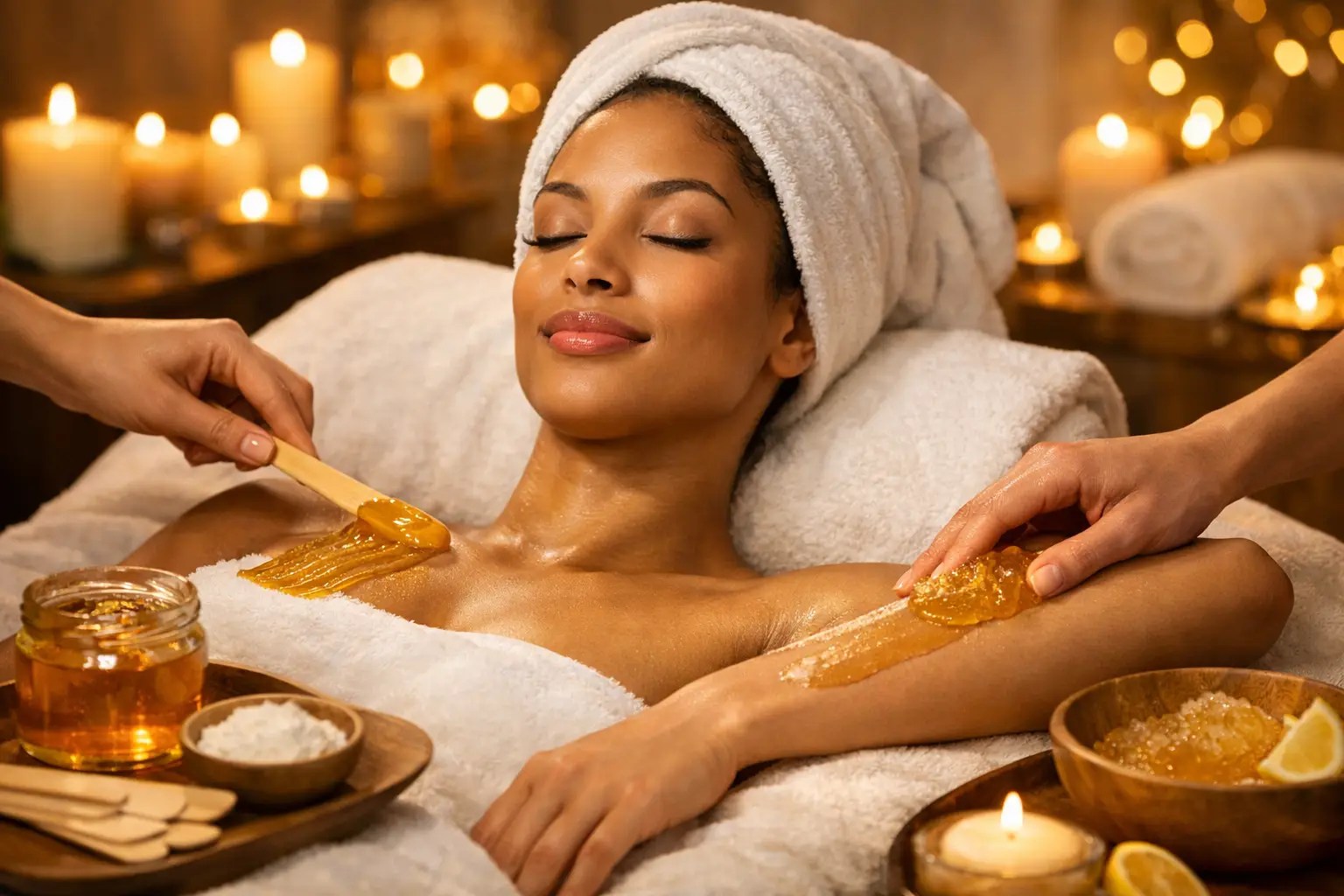
Sugaring paste is traditionally made from sugar, water, and lemon. It is worked into the skin at a warm or room-temperature consistency, then removed in the direction of hair growth. This technique may feel gentler to some clients, particularly those who are sensitive to heat or prefer a short, uncomplicated ingredient list.
Neither method is automatically irritation-free. Sugaring can still cause redness, follicle irritation, or discomfort if the skin is not properly prepared or the hair is removed too aggressively. Waxing can be beautifully tolerated by sensitive skin when the correct wax is selected, the temperature is carefully monitored, and the provider works with precision.
The most useful question is not, “Which one hurts less?” It is, “Which method is most appropriate for my skin, hair texture, treatment area, and current routine?”
Professional waxing offers versatility. Different waxes can be selected for different areas, from brows and upper lip to underarms, bikini areas, legs, and arms. For clients with coarser hair or dense growth, a well-performed hard wax service can be efficient and effective without repeated passes over the same spot.
Hard wax may be especially appealing for sensitive areas because it is often used at a lower level of skin adhesion than strip wax. The provider can also work in smaller sections, which allows for greater control around contours and more delicate skin.
Waxing may be a strong option if you have had consistently good results with it, your skin is not currently compromised, and you prefer the speed of a familiar treatment. It can also be easier to tailor the service when a trained esthetician has assessed your skin and knows which products you use at home.
The trade-off is that some wax formulas contain ingredients that do not agree with every client. Fragrance sensitivity, resin sensitivity, and heat sensitivity should all be discussed before treatment. If you have reacted to wax in the past, it is worth identifying whether the issue was the formula, the temperature, the technique, or aftercare rather than assuming all waxing will create the same response.
Sugaring is often attractive to sensitive-skin clients because of its simple ingredient profile and lower-temperature application. The paste is generally water-soluble, which means residue can usually be removed without heavily oil-based cleansers or vigorous rubbing. For skin that is easily bothered by fragrance or complex cosmetic formulas, that simplicity can feel reassuring.
Because sugaring is removed in the direction of hair growth, some people experience less hair breakage and fewer ingrown hairs over time. This is not guaranteed, especially for clients who are prone to ingrowns due to curly or coarse hair, tight clothing, friction, or inconsistent exfoliation. Still, it can be a meaningful advantage for certain treatment areas.
Sugaring may be particularly worth considering if you have felt overheated during wax services, prefer a minimal formula, or notice that your skin responds best when there is less pulling against its surface. It does require an experienced hand. Proper paste consistency and technique make a noticeable difference in both comfort and results.
The best hair-removal experience begins several days before you arrive. Keep the skin hydrated, but avoid heavy occlusive body products directly before your service if they may interfere with product adherence. Your hair should be long enough for effective removal, usually about one-quarter inch, rather than freshly shaved stubble.
Pause retinoids, exfoliating acids, and other sensitizing topical products on the area being treated according to your provider’s guidance. If you are using prescription acne medication, have recently had a peel, are prone to cold sores around the mouth, or are managing an active skin condition, disclose it before booking. There are times when postponing hair removal is the safest and most elegant choice.
Avoid tanning, extended sun exposure, and vigorous exfoliation before treatment. Skin that is already warm, dry, or inflamed has less resilience. If you are trying a new method or visiting a new provider, a patch test can offer useful information, although it cannot predict every reaction.
A little redness after hair removal can be normal, especially on the face, underarms, or bikini area. Your aftercare should focus on cooling the skin, reducing friction, and preserving the barrier rather than immediately trying to exfoliate every follicle.
For the first 24 to 48 hours, skip hot baths, saunas, intense workouts, swimming pools, self-tanner, fragrance-heavy body products, and tight clothing over the treated area. These can increase heat, bacteria exposure, and irritation when follicles are freshly opened. Do not pick at bumps or attempt to tweeze emerging hairs too soon.
Once the skin has settled, gentle exfoliation can help reduce the chance of ingrown hairs. The right approach depends on the area and your sensitivity level. A mild, consistent routine is more effective than aggressive scrubbing. If your skin tends toward dryness or irritation, support it with a fragrance-conscious moisturizer and daily SPF on exposed areas. At Mink Total Medical Spa & Wellness, personalized skincare guidance can help ensure your home routine supports, rather than disrupts, your professional treatments.
Hair removal should be postponed over sunburned skin, open lesions, active rashes, severe irritation, or areas that are peeling after a chemical exfoliation treatment. The same applies if you are experiencing a flare of eczema, psoriasis, or dermatitis in the treatment area.
Tell your provider about prescription medications and recent aesthetic services. Certain medications and topical treatments can make the skin more prone to lifting or tearing with waxing, and sensitivity can vary greatly from one person to the next. An experienced esthetician will never treat a contraindication as a minor inconvenience.
For many clients, sugaring is the more comfortable first option because of its simple formula and lower-temperature application. For others, carefully selected hard wax provides a faster, equally refined result. The answer may even change by body area: one method for brows or bikini services, another for legs or underarms.
Give your skin a chance to show you what it prefers. Track how long redness lasts, whether bumps appear, how quickly ingrowns develop, and how your skin feels in the days afterward. A consistent method, paired with expert technique and calm aftercare, is what turns hair removal from a recurring irritation into a polished part of your self-care routine.
Home versus professional facials: learn when each supports clearer, calmer skin and how to build…
Stress skin recovery begins with a calmer routine, barrier-focused care, and professional guidance for lasting…
Charleston skincare results come from personalized care, professional treatments, and a consistent home routine built…
Barrier repair skincare trends favor calmer routines, smarter actives, and personalized support for resilient, comfortable,…
Find the best acne creams adults can use, plus the ingredients and routines that help…
A guide to professional facial extractions: learn what to expect, how estheticians protect your skin,…
This website uses cookies.